

A reputable medical marketing approach allows a multispecialty clinic to offer multiple services under one brand while maintaining a single master brand. But it offers every speciality, treatment, and provider its own page and message. Patients search for symptoms and treatments rather than the term “multispecialty clinic.” Thus, communications should be tailored to their needs, from speed for urgent care to credentials for surgery.
To promote multiple services under one brand, a multispecialty clinic should rely on consistent healthcare branding. Each specialty gets its own pages, messages, and ads. Some patients do not search for a multispecialty clinic; instead, they look for a treatment, a specialist, or a symptom. So each of the clinic’s medical services requires a unique entry point. This approach also builds community trust, boosts clinic visibility, and captures targeted queries.
A mistake here has a serious cost. According to LocaliQ’s healthcare search data, the median cost per lead is $66.02, and that figure varies widely by specialty. So one generic campaign wastes money. In this article, we will cover site structure, messaging, healthcare advertising, and reviews. So you can easily plan your own medical clinic marketing strategy.
How Should You Structure Your Digital Architecture for One Brand?
Structure your digital presence around one consistent master brand. Use the same clinic name and logo everywhere. Each medical specialty and key treatment has its own page, each provider has a profile, and you have one strong Google Business profile. This setup helps patients with a specific need land on a page that answers it, and it builds recognition for the same clinic.
Keep One Master Brand
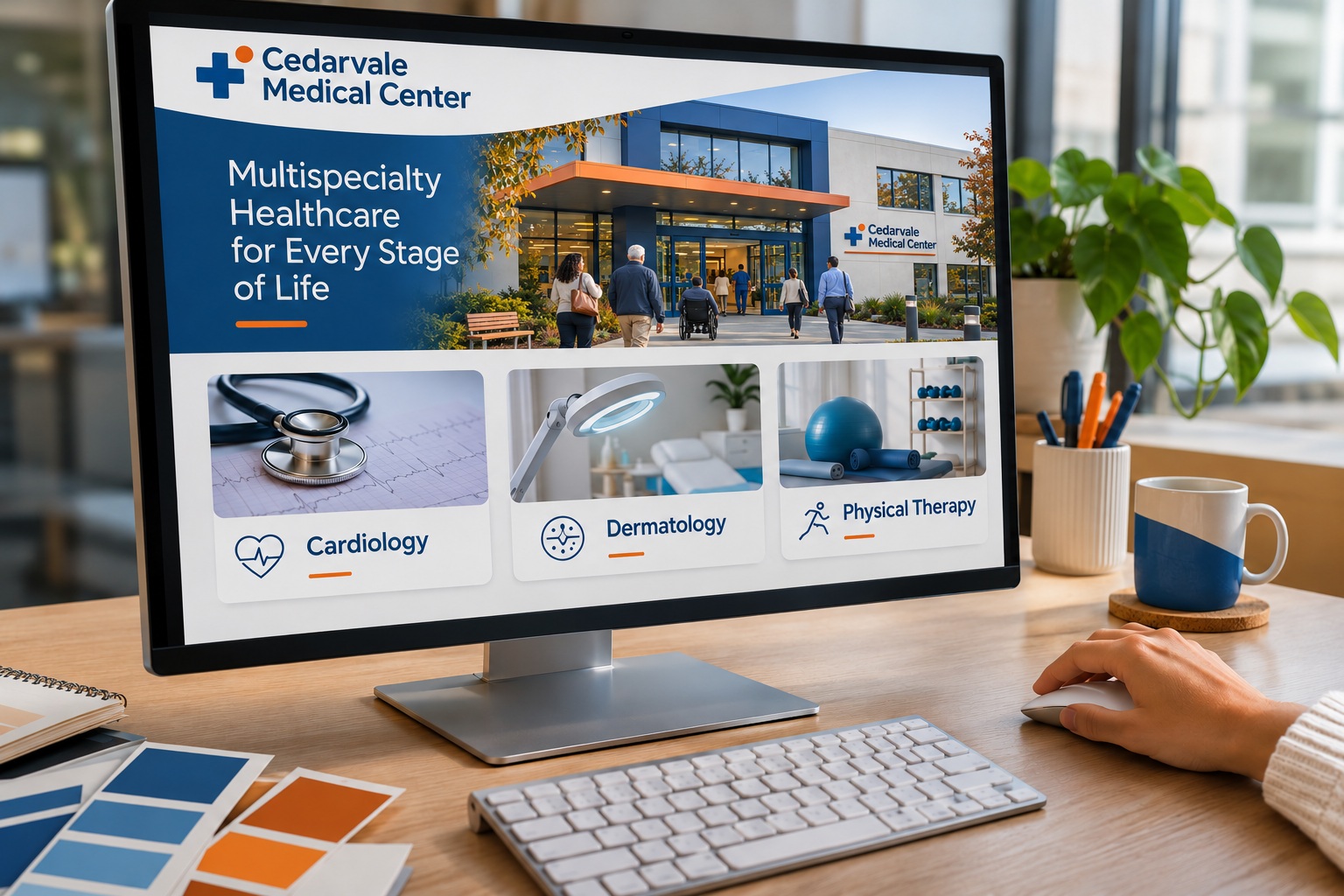
Use the same clinic name, logo, colors, and tone on your website, listings, signs, and social pages. Consistent medical practice branding helps establish community authority and makes each new service feel like part of a clinic patients already know. Strong clinic branding is also the basis of every clinic promotion.
Build Dedicated Speciality and Service Pages
Create a page for every core speciality, sub-specialty, and high-value treatment. Avoid putting dermatology, cardiology, and physiotherapy on one generic “Services” page. Dermatologists, cardiologists, and orthopedic specialists each treat different types of patients, so each category deserves its own page. Effective medical SEO and multispecialty clinic SEO rely on deep, targeted content that ranks higher and provides more thorough answers to patient inquiries.
Give Every Provider a Profile
Every doctor needs a landing page that includes credentials, affiliations with local hospitals, languages spoken, and a direct booking option. Patients frequently choose a person first, which means that a patient’s trust in one physician becomes trust in the clinic. This is especially true for primary care physicians, who often refer patients to in-house specialists, and for pediatricians, whom parents choose based on comfort and reputation.
Unlike hospital marketing that leans on a famous institution name, a multispecialty clinic often wins on individual doctor trust. And strong provider pages also improve patient engagement.
Unify Local SEO With One Main Profile
Keep a single strong Google Business Profile for the physical location. You can include every department, its hours, and its direct phone line in the profile details so patients can find the right services in one place. This enhances local search presence and helps healthcare patient acquisition.

How Do You Match Messaging to Patient Intent?
Ensure that your message matches the intent of the user. Urgent care and pediatric services should focus on quick appointments, easy drop-ins, and convenient locations. Elective and surgical services should focus on expert doctors, recovery time frames, and trust signals. Symptom-related content lets you target people who aren’t sure which specialist they need. This shows that effective healthcare service promotion starts with this type of matching.
Replace Generic Slogans
Instead of a general statement, such as “world-class care for your family,” create a message tailored to the issue a patient is having. For example, “pain in knees limiting mobility” or “questions about maternity care.” Specific messages such as these sharpen healthcare brand positioning. This also shows that patients know exactly what the clinic solves.
Publish Symptom-Based Content
Creating symptom-based content helps you reach people early in their search. For example, a guide on “When to see a cardiologist or a pulmonologist for shortness of breath” helps patients decide which department to book. This kind of content supports multispecialty healthcare marketing across the whole clinic.
How Can You Build Reputation and Cross-Referrals Across Specialities?
Ask for reviews from every patient immediately after their appointment, and tag each review by service. Train front-of-house staff and primary care physicians to identify when patients might need help from another department. This way, each department gains social proof from reviews, and internal referrals keep patients in your clinic, creating continuity of care, stronger patient retention, and steady medical practice growth.
Automated Review Collection
Immediately after appointments, prompt patients to leave a short review. Ensure that each review is tagged by service so that evidence builds up in every department, while all reviews still sit on one general page. Reviews are a quiet but powerful form of clinic promotion.
Internal Cross-Referrals
Train front-of-house staff and primary care physicians to recognize when a patient may need support from another department. It is much easier for healthcare providers to be referred internally. This includes sending a patient to an in-house dietitian or from a pediatrician to a specialist. Excellent medical practice management makes this routine with a simple referral process and shared notes.

Frequently Asked Questions
Can a multispecialty clinic use one brand for every service?
Yes. Multispecialty clinics can use one brand for every service, as long as each service has its own page, message, and booking system. A single central brand builds trust in your clinic, while individual pages target specific searches.
How many web pages does a multispecialty clinic need?
Ensure that you have a page for each core service and high-value treatment. Along with this, confirm that you have individual profiles for every doctor. Detailed pages for each service help each of your medical services rank on Google.
Which ads work best for multiple services?
The best ads are high-intent searches for specific local services. Social media ads will increase brand awareness. Both should be directed to the relevant service pages with easy booking options.
What are internal cross-referrals in a clinic?
If front-of-house staff/primary care doctors identify that a patient may need support from another department, they can refer them internally. This means the patient will remain in your clinic.
Final Thoughts
To successfully promote many services within one brand, ensure there is one central brand name, with individual pages, messages, and booking systems for each service. Ensure that messages match the intent of individuals in each service. Use targeted advertising for specific services. Gather reviews, tagged by service, and encourage internal referrals. Monitor figures monthly, and adjust budgets to support the most effective services.
With consistent healthcare promotion and a well-planned clinic growth strategy, you can turn one brand into several reliable sources of patients. If you need help setting up this structure, Quaintise can help. Let’s get all of your services promoted under one strong brand. Get in touch with Quaintise.