

Healthcare brand development means turning your clinical strengths into a clear promise. You can then prove it at every touchpoint. You can start by taking an honest look at your reputation and patient journey. Then define a clear position that explains who you serve and what you do well, rather than a general claim like “quality care.” Then ensure your design, messaging, and health information are consistent and easy to read. In the end, you can back up your promises with friendly staff and simple scheduling.
Brand development for healthcare is usually about building trust with your clinical skills and the promises you make to patients. This all starts with a clear position and a consistent look and voice. Your care experience should also align with what you say online.
A healthcare brand, unlike other consumer brands, needs to soothe people’s concerns. They also need to show their expertise quickly, whether they are hospitals or small medical practices. In this guide, we explain how to review your brand and define your brand positioning. We also explain how to keep your promises.
Audit Your Current Brand Before You Change Anything
A healthcare brand audit is how patients, referral clinicians, and your team see your practice today. Then you compare that image to what you say. This step helps you find areas where your message and daily care don’t match. A new logo or headline will not solve the issue without it. When you get this right, you build good healthcare branding and brand strategy.

Review Services, Referrals, and Reputation
You can start with your service lines, referral sources, and online reviews. Then you can look at the digital path a patient follows from search to visit. Your reputation needs extra time. In one rater8 survey covered by Medical Economics, 84% of patients said they check online reviews before they choose a new provider.
According to a 2026 report, 75% of patients said they would not book a provider with a rating below 4.0 stars. When you focus on reputation management, you help protect your brand reputation.
Listen to Leaders and Frontline Staff
Leaders can understand the strategy. Receptionists, nurses, and assistants, on the other hand, see when patients may feel confused or frustrated. You may ask both groups what causes patients to slow down. Long phone wait times, unclear forms, and unexpected bills are a few examples. Their answers can help you find easy ways to improve the patient experience before you begin any redesign.
How Do You Position a Healthcare Brand?
You can position your healthcare brand by stating who you serve and what you do best. You should also make one promise your team can keep every day. A strong healthcare brand positioning should be clear and focused enough to feel believable. It should also be specific enough for people to remember.
Replace Generic Claims with Specific Promises
Many practice websites include phrases like “quality care.” As a result, they do not help anyone choose. Instead, say something patients can confirm, such as same-week visits for new patients. Before you make a promise, make sure that every team member can keep it, even on a busy Friday. When your brand positioning is clear, your healthcare marketing has one consistent message to repeat.
Keep One Identity for Different Audiences
Your main brand identity should not change. However, the proof you offer can vary depending on who is reading it. The table below shows an easy way to organize these details.
Audience |
What They Need to Feel |
Proof Points to Show |
| Patients | They feel reassurance, access, and empathy | You can show them what to expect at their first visit, available appointment times, and real patient stories |
| Referring clinicians | They want to know they can rely on your team and its clinical work | Credentials, how quickly you send reports, and how easy it is to make a referral |
| Community partners | They share values and dependable follow-through | Local involvement, steady communication, and shared goals |
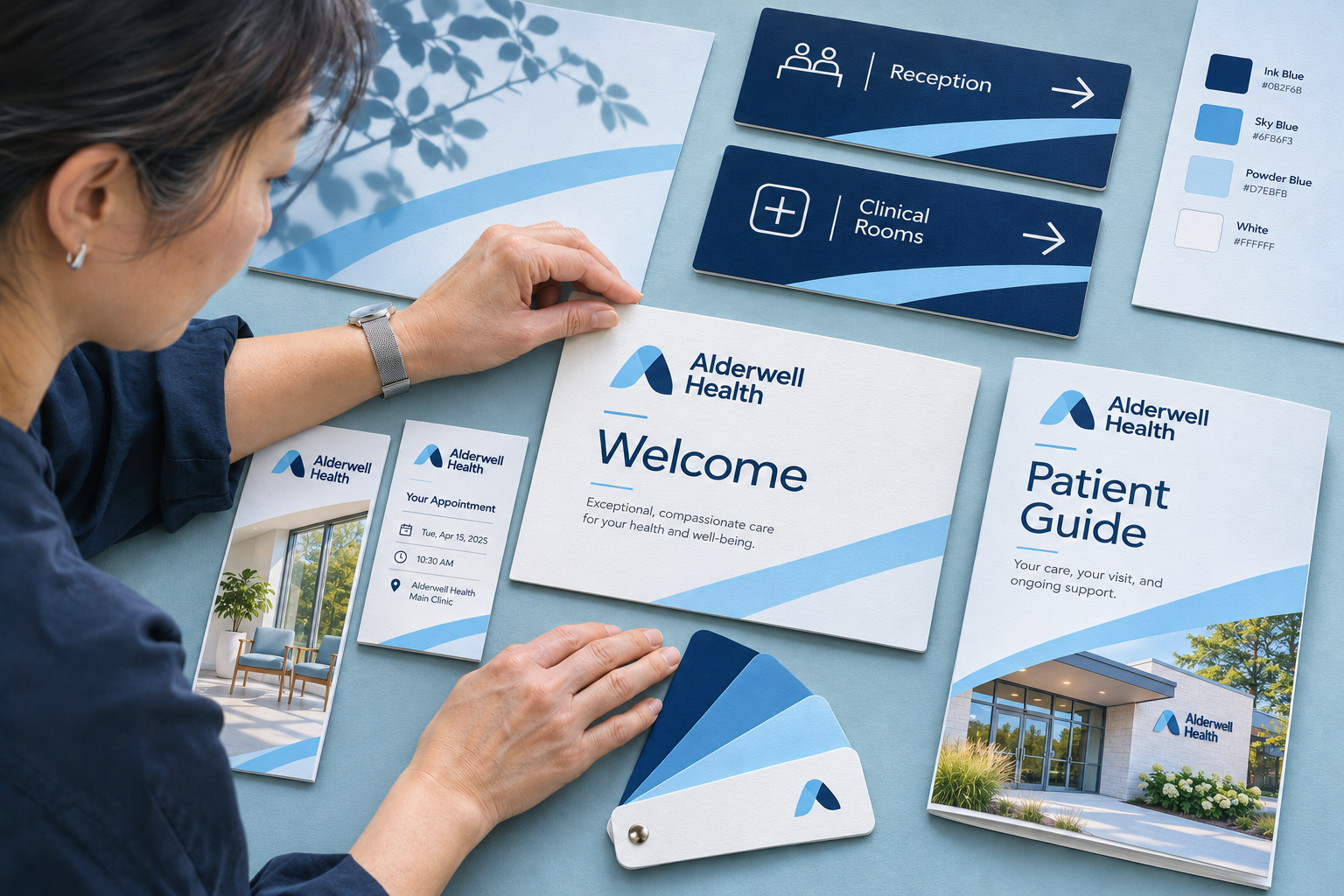
Build a Calm, Consistent Identity and Digital Presence
A healthcare identity should be calm, clear, and human. It should also appear and sound the same wherever a patient meets you. When people are under stress, they tend to search. As a result, confusing pages or mixed messages increase stress rather than reduce it.
Use Calm, Accessible Design
Choose colors, fonts, and images that feel warm and easy to read. So always check that every page works perfectly on your phone. Make things easier for worried patients with short menus, prominent buttons, and a visible phone number or booking link. This allows them to take the next step quickly. Your visual identity also helps build brand recognition over time.
Keep Messaging Consistent
Your voice, tone, and details should match your website and search listings. Make sure they also match intake forms, patient messages, and social channels. Like your website might say walk-ins are welcome. However, your Google listing says appointments are required. And this can quickly affect patients’ trust.
Lead with Helpful Education
Before your first visit, reading health information in simple words can create trust. This is important because the CDC reports that around 9 out of 10 adults have low health literacy. As a result, short articles explaining procedures can help patients know what to expect. Also, honest information helps them feel prepared, not anxious.

Deliver on the Promise Through Patient Experience
Your brand promise shows what happens during your real visits and calls. That is why the patient experience is more important than any headline. Your brand values should be clear in every interaction.

Empower Frontline Ambassadors
Your reception team, nurses, support staff, and clinicians all help to build trust. They do this by listening to patients, treating them with respect, and visiting. So training your team to listen and show courtesy helps to shape your brand. These everyday moments also help you to grow strong patient relationships.
Remove Friction from Every Step
You can make your practice feel reliable with smooth scheduling and clear cost conversations, visit reminders, and billing explanations before every visit. Make sure you return calls within a set time. With small improvements like these, you can create a smooth patient experience.
Close the Feedback Loop
Healthcare providers can track their reviews, branded searches, and patient retention. This helps you find gaps between your promise and daily care. You should reply politely, fix any issues you can, and follow HIPAA when you reply. You should never confirm that a reviewer was a patient. This healthcare reputation management is part of a wider healthcare branding strategy.
Frequently Asked Questions
Why is healthcare branding different from other industries?
Patients may feel worried when they come in for care. Your brand should help ease those worries and show your expertise from the start. Your words should match the care patients actually receive. Patients can quickly tell when your promises and their experience don’t match.
How do you position a healthcare practice?
List the people you serve, describe what you do best, and include one promise your team can keep. Avoid vague phrases and back your position with specific proof, including credentials or appointment access.
How do online reviews affect patient trust?
Patients usually form their first impression of your practice through online reviews. According to the One Rater survey, 84% of patients check reviews before they choose a provider. So ratings and replies deserve regular attention.
How often should you review your healthcare brand?
We can plan a full audit at least once a year in advance and check listings and reviews more frequently. You should review it again after serious changes. This includes a new location or service.
Why does plain language matter in healthcare content?
The CDC notes that limited health literacy affects around 9 out of 10 adults. Simple and easy-to-understand language helps patients understand what to expect. They can also decide with confidence.
Final Thoughts
The main factors of healthcare brand strategy include a clear position, a consistent presence, and care that fulfills your promise. Medical branding is confirmed by patient experience. However, both medical practice branding and medical brand development rely on steady healthcare brand communication. You build patient trust building through every visit.
If you want to strengthen your brand and build lasting patient trust, we at Quaintise are ready to help you define your goals and next steps.